This information on this website is provided by AstraZeneca for educational purposes only and this site is intended for Non-UK and Non-US healthcare professionals only. It should not be used for diagnosing or treating a health problem or disease.

SO HOW CAN WE PRECISELY DEFINE CHRONIC KIDNEY DISEASE (CKD)?

CKD is defined as either decreased kidney function, identified by an eGFR of <60 mL/min/1.73m2, or as kidney damage, identified by a UACR ≥30 mg/g (≥3 mg/mmol), when measured at 2 timepoints over a ≥3-month period.7
EARLY DIAGNOSIS CAN HAVE A SIGNIFICANT IMPACT.

Don’t wait for eGFR to drop below
60 mL/min/1.73m2
or UACR to increase above 30 mg/g – it’s time to act on CKD.3


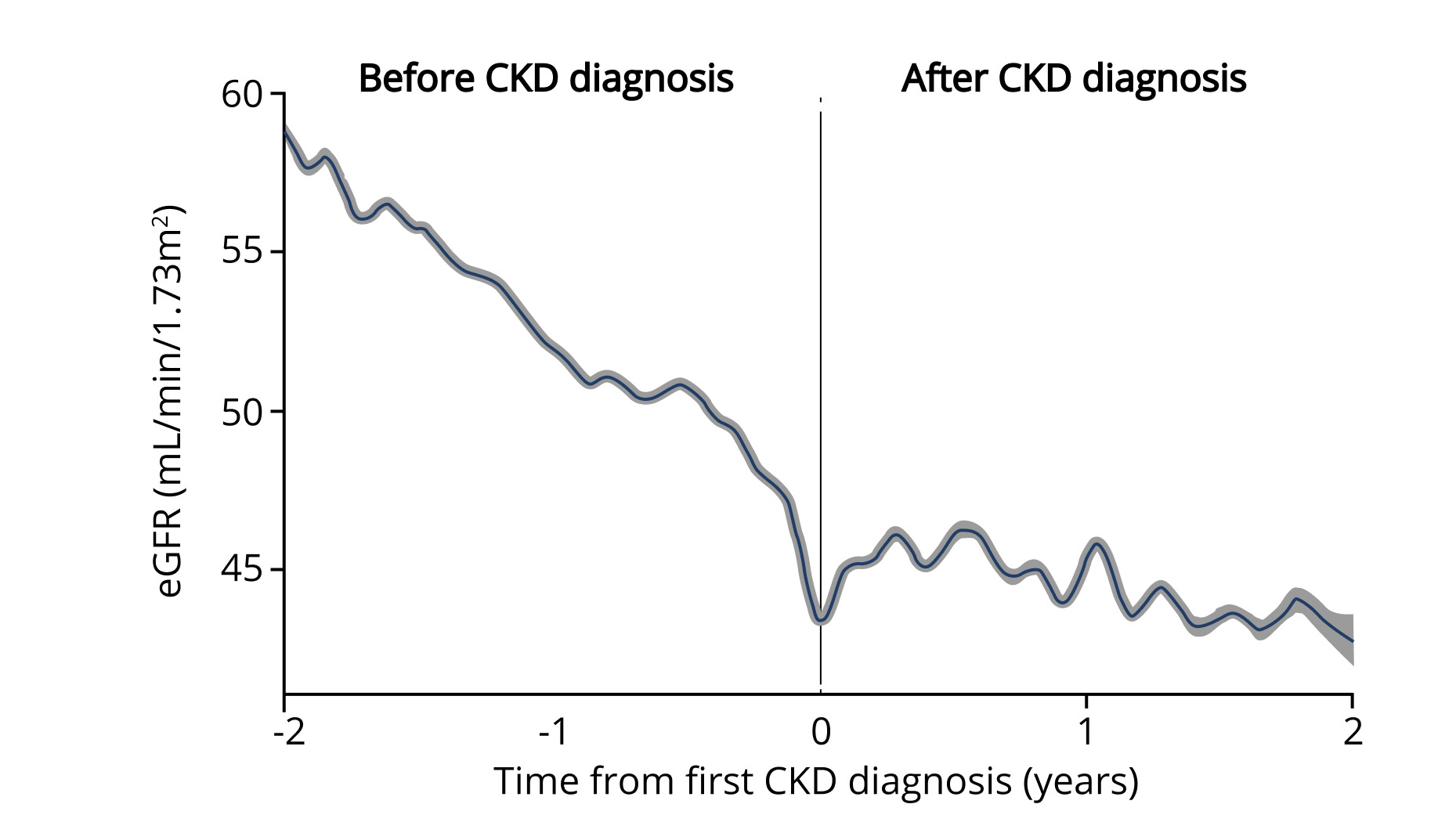
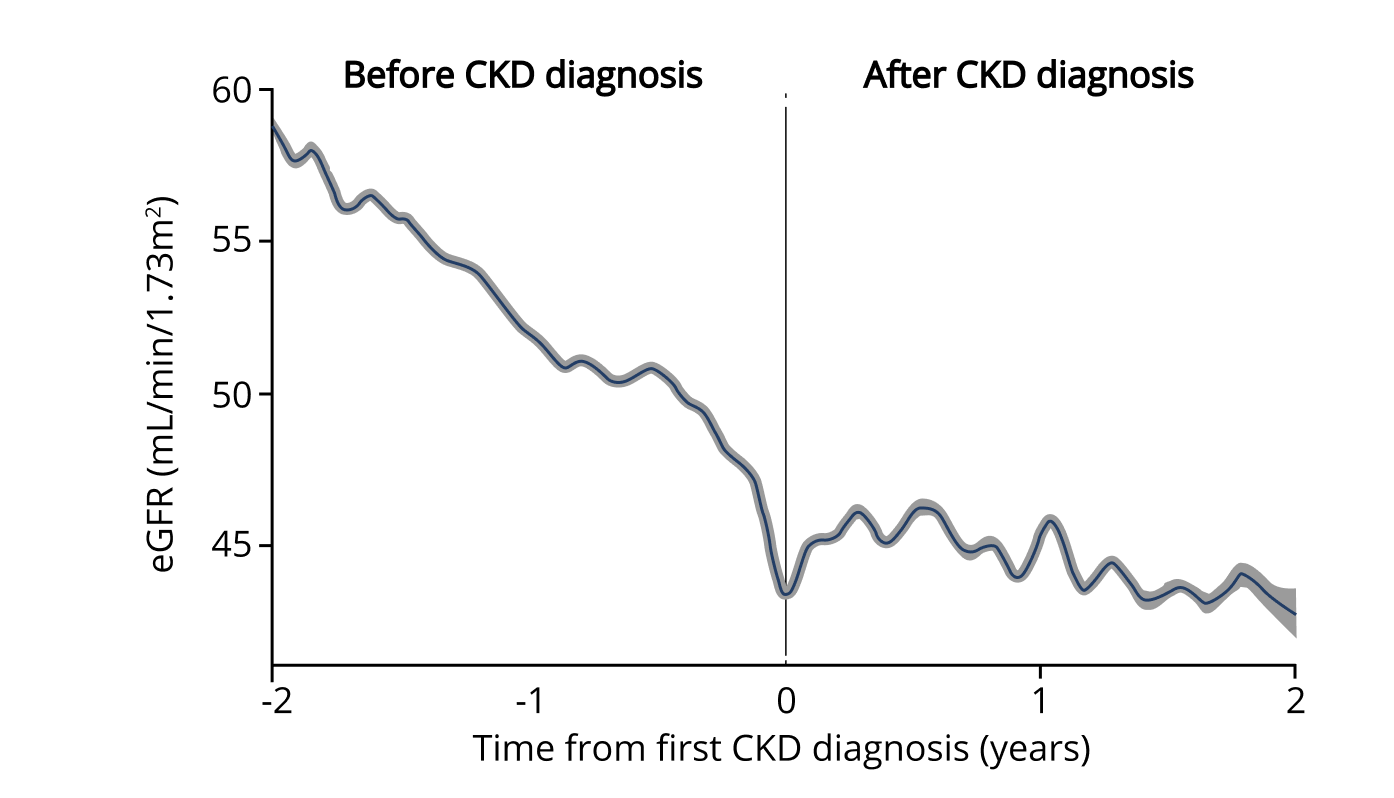
REVEAL-CKD was a retrospective observation study examing the associations between diagnosis and progression in patients with stage 3 CKD (N=26,851).4

Line Graph Representing Before and After CKD Diagnosis

Shaded area represents 95% CI.4

Adapted from Tangri et al, 2023.4

+

An eGFR <60 mL/min/1.73m2 is not normal for any age.3 Damage to kidneys and declines in kidney function have been shown to produce widespread effects that lead to poorer outcomes, such as cardiovascular events, hospitalization, and mortality.4,5

Regular screening of both your patients at risk and those with compromised kidney function is important and has been shown to slow disease progression and reduce the risk of complications.4,5

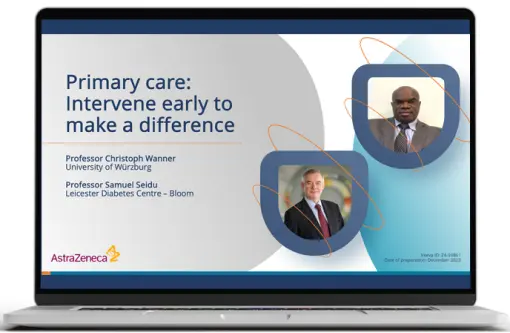
Watch Professors C. Wanner and S. Seidu Discuss the Critical Importance of CKD Early Diagnosis in Primary Care

Watch Profs. C. Wanner and S. Seidu explain why early diagnosis in primary care is so important

Watch Video
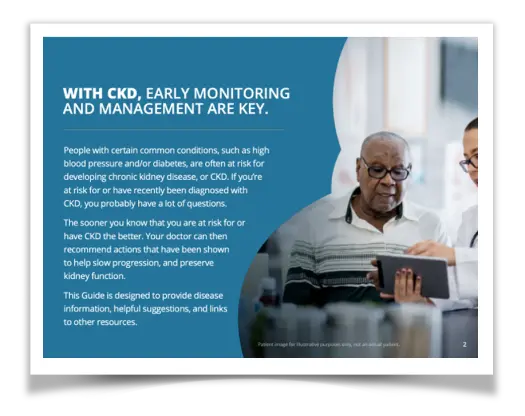
Download the CKD Guide to Learn More About At-Risk Patients and How You Can Help

Discover which of your patients could be at risk of CKD. Download the CKD guide to read more about at-risk patients and how you can help

Download the Guide

KNOW YOUR PATIENT'S NUMBERS.

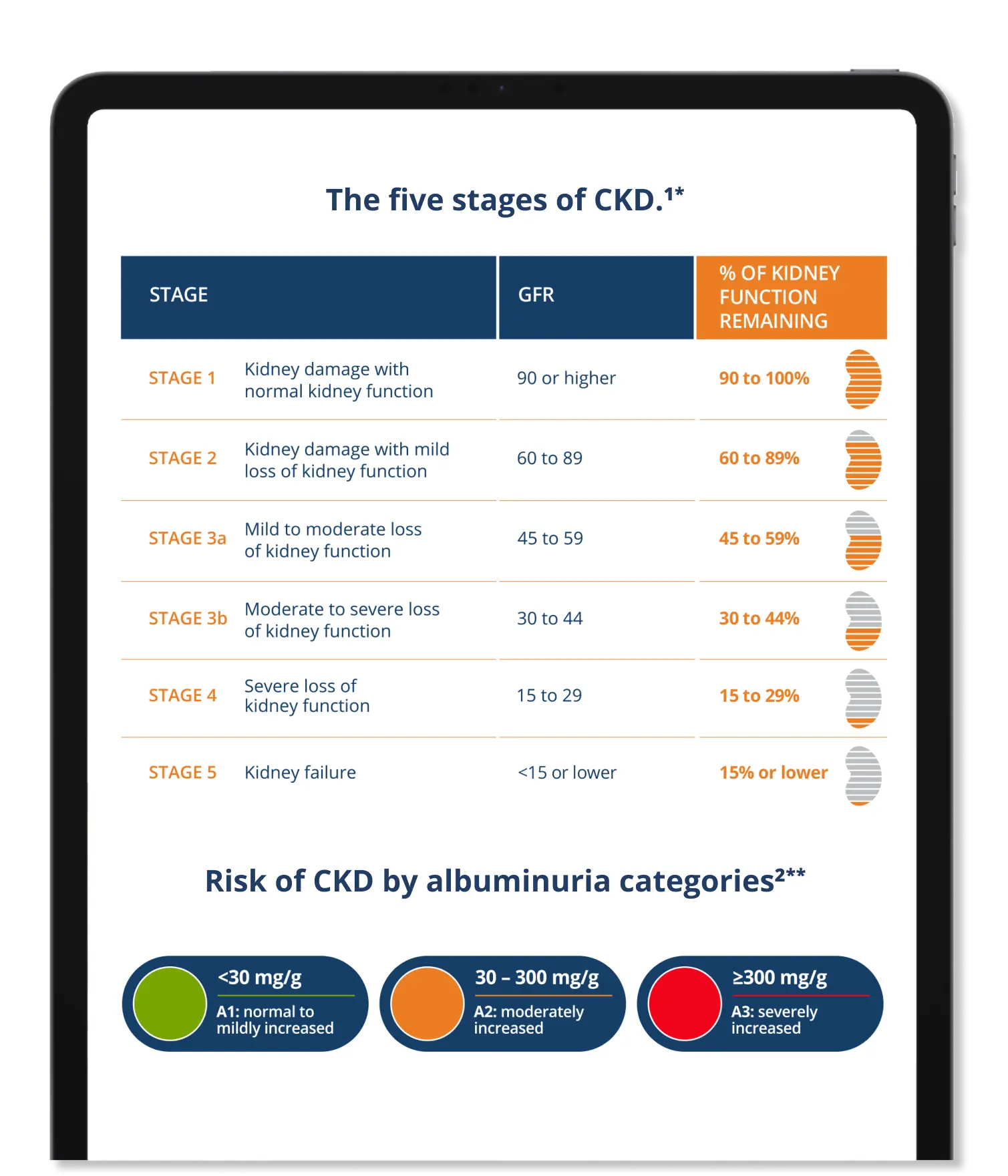
Get the complete picture of CKD diagnosis and progression with 2 easy tests - eGFR and UACR.1,2

Early intervention guidelines suggest using eGFR along with the UACR test to enhance screening accuracy and to help improve long-term prognosis.3

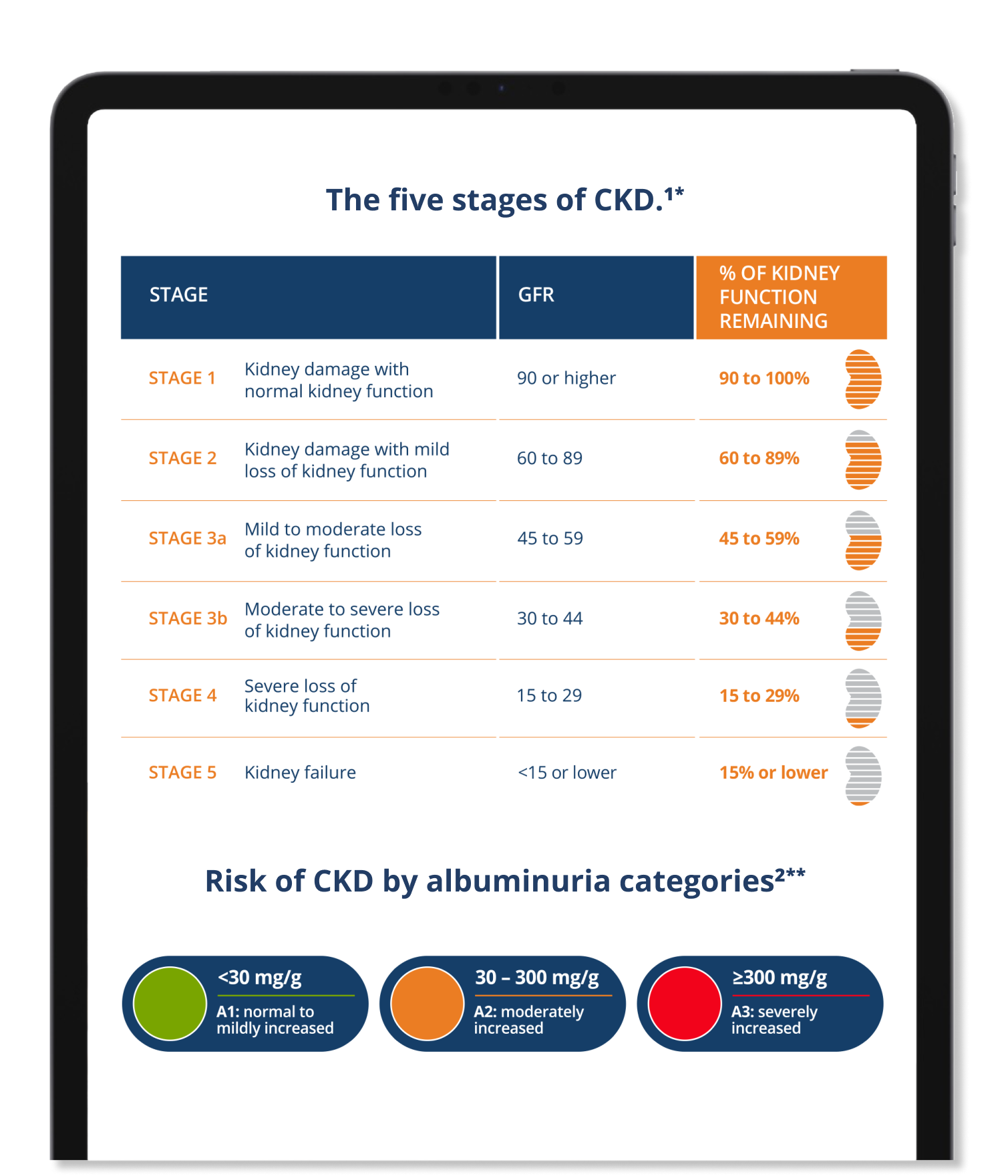
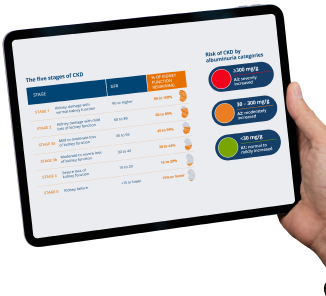
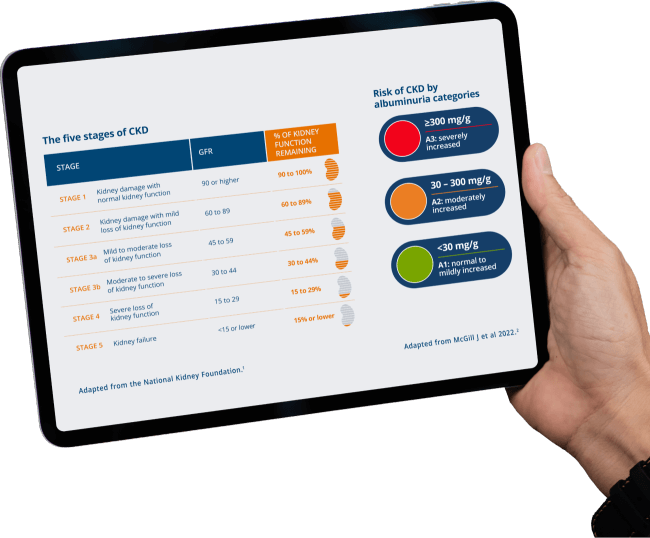
You can use charts, such as these, to support your discussions with patients about eGFR as a measure of “remaining kidney function.”1


*Adapted from National Kidney Foundation.1

**Adapted from McGill J et al 2022.2

Gain a Comprehensive Understanding of CKD Diagnosis and Progression with eGFR and UACR

*Adapted from National Kidney Foundation.1

**Adapted from McGill J et al 2022.2

Read more about knowing your patient’s eGFR and UACR numbers.

"All too often, the heightened threat of CKD to people with diabetes is overlooked by healthcare professionals. There is a clear need for urgent action to address low awareness of the risk factors and to ensure more is done to promote early detection and intervention."

Professor Andrew Boulton,
Immediate Past President of the
International Diabetes Federation

"Despite guidelines recommending people with hypertension receive routine eGFR and UACR screening for CKD, few do in clinical practice. Early and regular screening of our hypertensive patients for CKD combined with optimal treatment will have a major clinical benefit for our patients."

Professor Reinhold Kreutz,
Immediate Past President of the
European Society of Hypertension

eGFR and UACR work together to help you understand CKD.

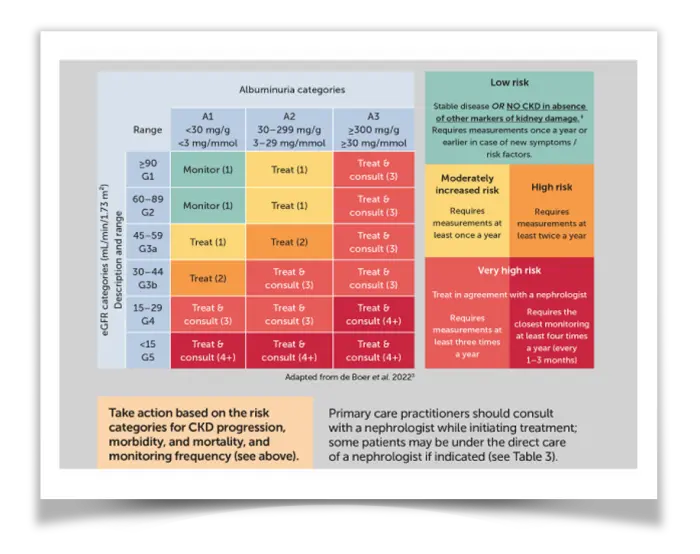
Guidelines, such as KDIGO, provide guidance to help us understand the risk of worsening outcomes and the importance of frequent monitoring.3

You can use the KDIGO heatmap below to support with initiation of appropriate management and understand when to refer to a nephrologist.3

KDIGO HEATMAP Utilize the KDIGO Heatmap to Guide Appropriate Management Initiation and Determine When to Refer to a Nephrologist.
Watch The Video to Learn How eGFR and UACR Tests Complement Each Other

Understand how eGFR and UACR work together

Watch Video
Access the CKD Early Identification and Intervention Toolkit. Download the ISN guidance

Download the ISN guidance here

This toolkit was supported by unrestricted grants from Pharmaceutical companies including AstraZeneca.

Download Guidance
Watch Professor P. Topsever Explains CKD Risk Categories Using the KDIGO heatmap.

Watch Prof. P Topsever walk through using the KDIGO heatmap

Watch Video
CKD Management Patient Counselling Resource

Get the Patient Counselling Resource

Download Brochure

CI, confidence interval; CKD, chronic kidney disease; eGFR, estimated glomerular filtration rate; KDIGO, Kidney Disease: Improving Global Outcomes; UACR, urine albumin-creatinine ratio.


References
  1. Estimated glomerular filtration rate (eGFR). National Kidney Foundation. Available here: https://www.kidney.org/atoz/content/gfr.
  2. McGill J et al. BMJ Open Diabetes Research and Care. 2022 Jul;10(4):e002806.
  3. ISN-KDIGO CKD Early Identification & Intervention in Primary Care document. Refer to guidelines for more information on treatment, monitoring and additional considerations for nephrology consultation. Commissioned and Funded by AZ. Available at: https://www.theisn.org/initiatives/ckd-early-screening-intervention/#PrimaryCare.
  4. Tangri N et al. Adv Ther. 2023;40:2869–2885.
  5. Tangri N et al. BMJ Open. 2023;13:e067386.

The information on this website is provided by AstraZeneca for educational purposes only and this site is intended for Non-UK and Non-US healthcare professionals only.

It should not be used for diagnosing or treating a health problem or disease.