• HOME
  • CKD TODAY
  • CLINICAL SUPPORT
  • DIAGNOSING CKD
  • SUPPORT MATERIALS
Astrazeneca logo

This information on this website is provided by AstraZeneca for educational purposes only and this site is intended for Non-UK and Non-US healthcare professionals only. It should not be used for diagnosing or treating a health problem or disease.

banner-image
mobile_image

CKD is a Progressive Condition and Prevalence is on the Rise Globally1‒3


CKD is a global priority, projected to become the 
5th leading cause of death worldwide by 2040.4,5

So how can we precisely define Chronic Kidney Disease (CKD)?

CKD is defined as either decreased kidney function, identified
by an eGFR of <60 mL/min/1.73m² or as kidney damage, identified by a UACR ≥30 mg/g (≥3 mg/mmol), when measured at 2 timepoints over a ≥3-month period.7

ACTION TO TACKLE CKD IS A GLOBAL PRIORITY4

CKD is a life-threatening condition that is vastly underdiagnosed.3 Diagnosing CKD in your patients early is an important first step in reducing disease progression and minimizing associated risks.2


Discover from Dr A Cebrian why
early diagnosis of CKD matters and how you can make a difference
for your patients.

Watch the Video

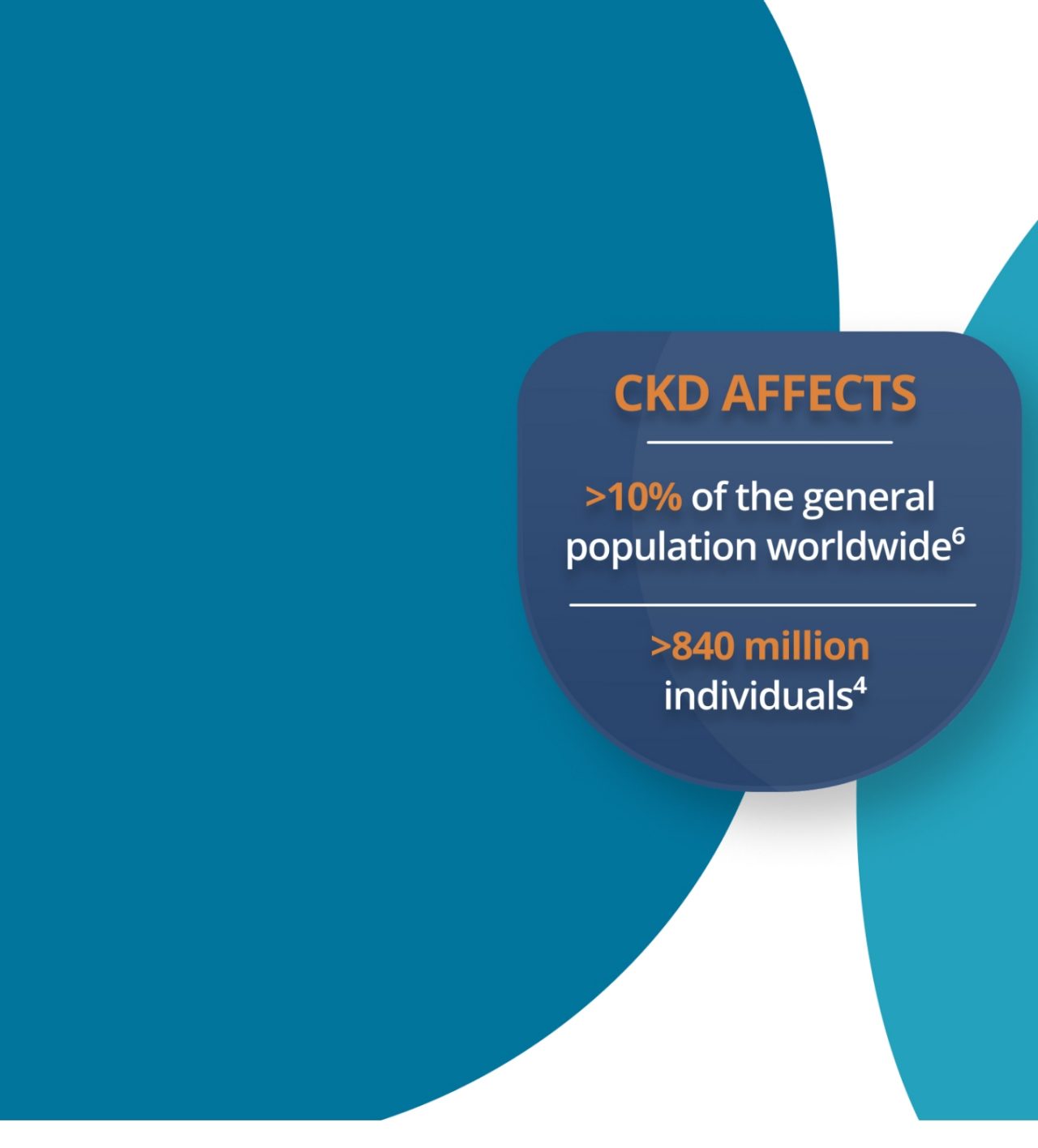
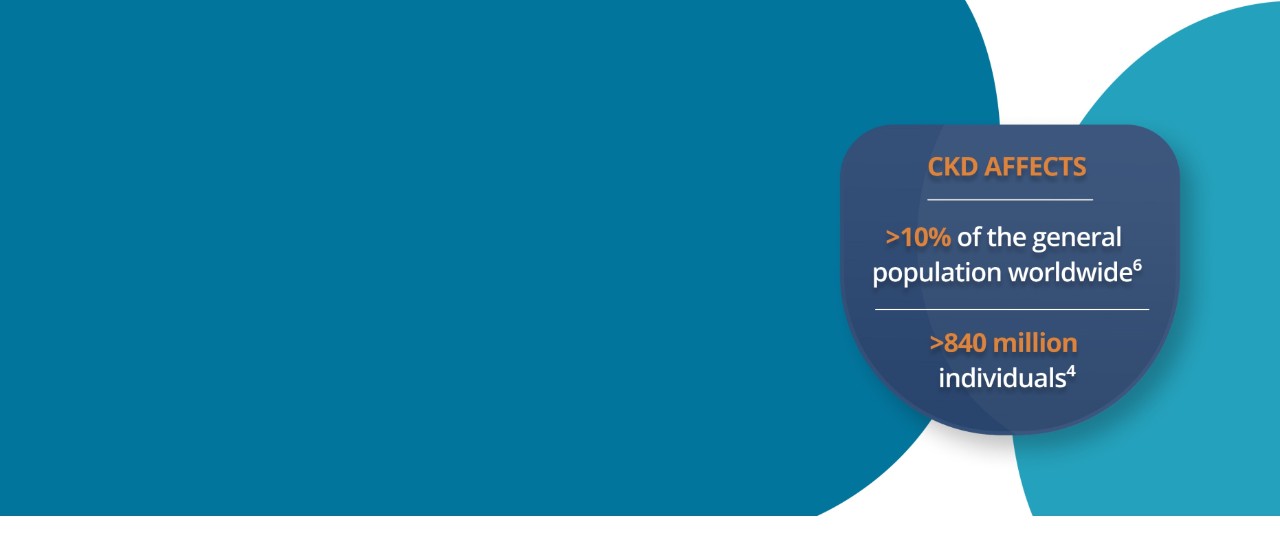
The prevalence of CKD is rising, with >840 million people around the world estimated to have CKD, and is expected to become the fifth leading cause of mortality globally by 2040.4,8

Yet 9 out of 10 people with CKD may not know
they have it
— in both developed and developing countries.5,9 Despite the substantially increased risk
of mortality, as few as 10% of adults with CKD are diagnosed, even in Stage 3 disease.2

Studies show that earlier diagnosis of CKD is associated with significant improvements in management and reduces the risks of disease progression and adverse clinical outcomes.2

WHO IS AT RISK?

Owing to aging populations 
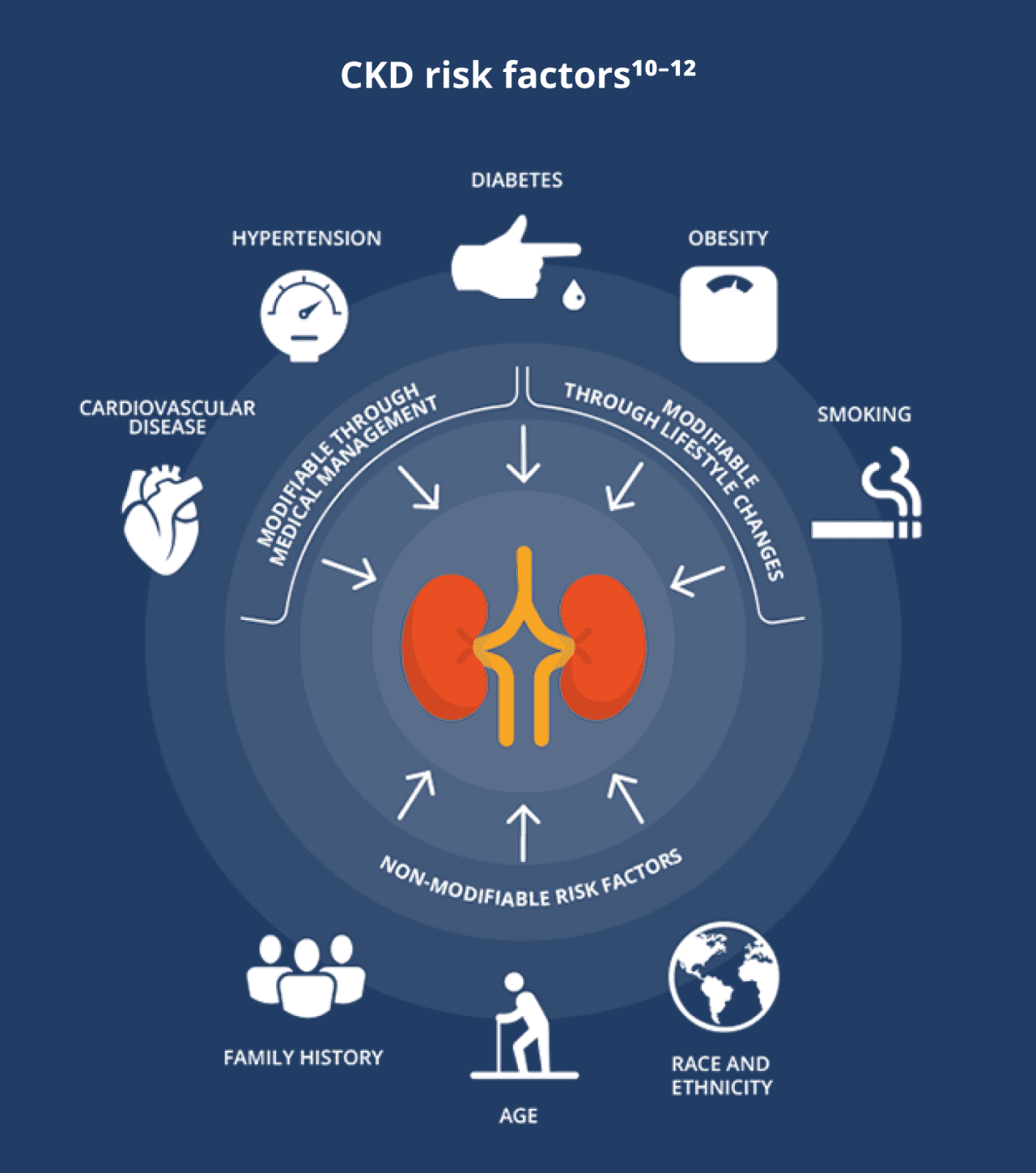
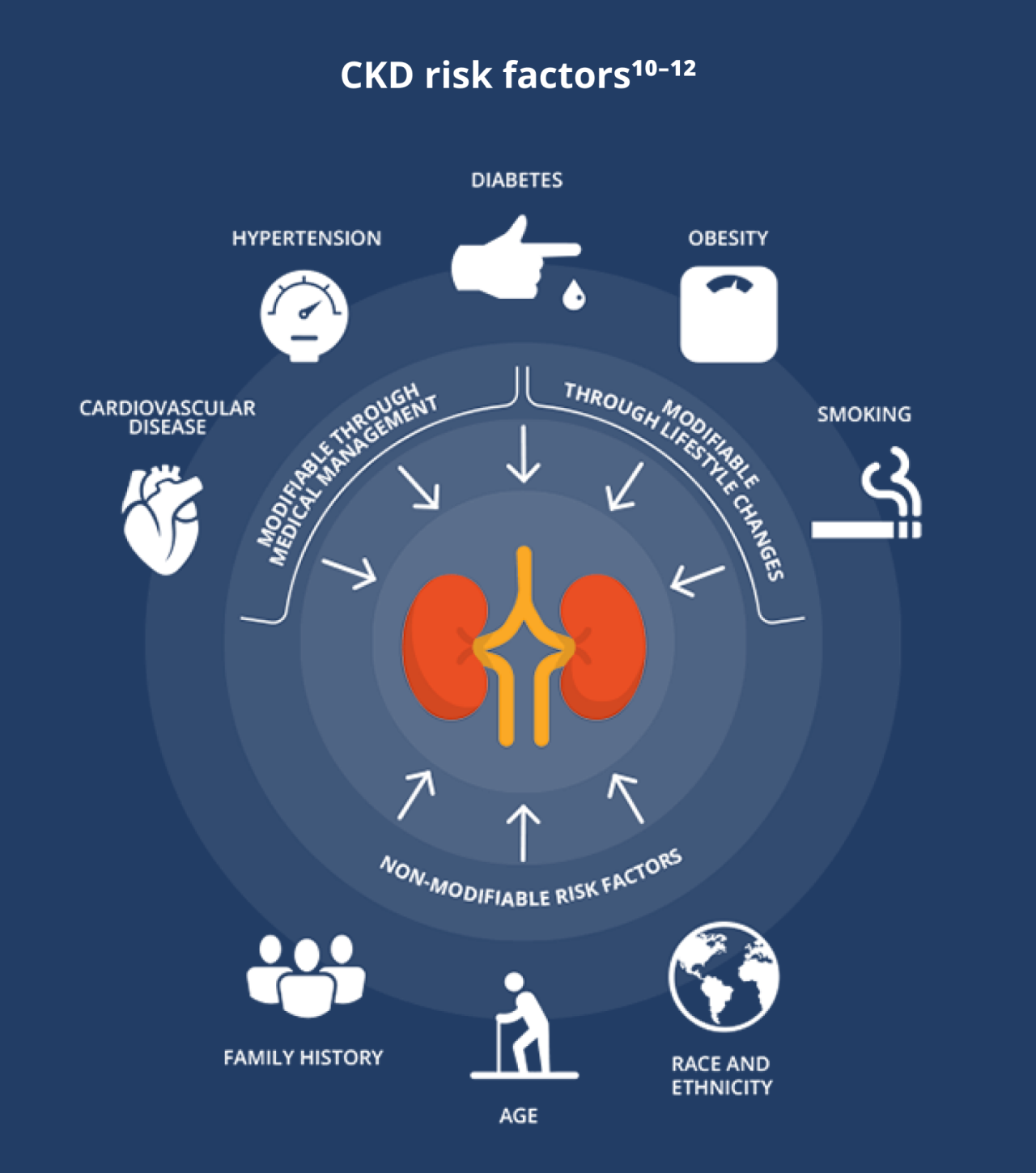
and increased prevalence of CKD-associated risk factors like hypertension, type 2 diabetes, and cardiovascular disease,

the incidence of CKD is on
the rise around the world.2


Prof. X Cos explains more about the risk of CKD in your patients with type 2 diabetes.

Watch the Video

You can identify your high-risk patients by assessing
for risk factors that can be controlled through counselling and treatment—meeting one or more of these criteria can put your patients at higher risk.10‒12

KDIGO guidelines recommend regularly checking your at-risk patients’ eGFR and performing a UACR test to monitor for CKD.7 Early diagnosis and intervention can help to delay disease progression and reduce the incidence of CKD-related complications.2


Hear from Prof. R Kreutz what you can do to help your patients with hypertension who might also be
at risk of CKD

Watch the Video

Risk Factors Associated with Chronic Kidney Disease (CKD)

+

Discover which of your patients could be at risk of CKD. Download the CKD diagnosis guide to read more about at-risk patients and how you can help.

Diagnosing CKD

Learn more about how to manage your at-risk patients.

Review the recommendations

This material has been commissioned and funded by AstraZeneca.

CKD, chronic kidney disease; eGFR, estimated glomerular filtration rate; KDIGO, Kidney Disease: Improving Global Outcomes; UACR, urine albumin-creatinine ratio.


References

  1. What is CKD? National Institute of Health. Available here: https://www.niddk.nih.gov/health-information/kidney-disease/chronic-kidney-disease-ckd/what-is-chronic-kidney-disease.
  2. Tangri N et al. BMJ Open. 2023;13:e067386.
  3. Tangri N et al. Adv Ther. 2023;40:2869–2885.
  4. Jager K et al. Nephrol Dial Transplant. 2019;34:1803–1805.
  5. GBD Chronic Kidney Disease Collaboration. Lancet. 2020;395(10225):709–733.
  6. Kovesdy C. Kidney Int Suppl. 2022;12:7‒11.
  7. ISN-KDIGO CKD Early Identification & Intervention in Primary Care document. Refer to guidelines for more information on treatment, monitoring and additional considerations
    for nephrology consultation. Commissioned and funded by AZ. Available at: https://www.theisn.org/initiatives/ckd-early-screening-intervention/#PrimaryCare.
  8. Foreman K et al. Lancet. 2018; 392(10159):2052–2090.
  9. Tiu H et al. Clin Nephrol. 2018;89(3)205–213
  10. Chronic Kidney Disease: The Basics. CDC. Available at: https://www.cdc.gov/kidney-disease/about/index.html.
  11. Kidney Disease Stats. National Institutes of Health, National Institute of Diabetes and Digestive and Kidney Diseases. Available at: https://www.niddk.nih.gov/health-information/health-statistics/kidney-disease.
  12. Marx N et al. EHJ. 2023;44:4043‒4140.

The information on this website is provided by AstraZeneca for educational purposes only and this site is intended for Non-UK and Non-US healthcare professionals only.
It should not be used for diagnosing or treating a health problem or disease.

Risk Factors Associated with Chronic Kidney Disease (CKD)
Cookie Policy
Privacy Policy
Legal Notice and Terms of Use
Contact Us
Site Map
ERA Leading European Nephrology
Primary Care Diabetes Europe (PCDE) Welcomes all Healthcare Professionals Working for People with Diabetes in a Community
European Society of Hypertension (ESH) Provide a Stable and Organised European Platform for Scientific Exchange in Hypertension
AstraZeneca Logo White
AstraZeneca Veeva Document ID: Z4-58094
Date of preparation: 11 2025
©2025 AstraZeneca. All rights reserved.

Access to this website is for Non-US and Non-UK healthcare professionals.

By clicking the link below, you declare and confirm that you are a Non-US and Non-UK healthcare professional.

ACCESS THE SITE

Patients or members of the public

The website is intended for Non-UK and Non-US healthcare professionals only. Please speak to your healthcare provider if you require further information about the burden of CKD.

Media

If you are a member of the press, you should contact
the AstraZeneca press office.Email: global-mediateam@astrazeneca.com
Tel: +44 (0)1223 344 800