


• HOME
  • CKD TODAY
  • CLINICAL SUPPORT
  • DIAGNOSING CKD
  • SUPPORT MATERIALS
Astrazeneca logo

This information on this website is provided by AstraZeneca for educational purposes only and this site is intended for Non-UK and Non-US healthcare professionals only. It should not be used for diagnosing or treating a health problem or disease.

“It's Time To Talk CKD”

Having a conversation with your patients is an important step in slowing the progression of chronic kidney disease, prolonging quality of life, extending life, and living free of dialysis.1 By talking to patients early, you can help them avoid surprises later. So when you see a decline in eGFR or an increase in UACR, kick off the conversation.

Let's talk CKD
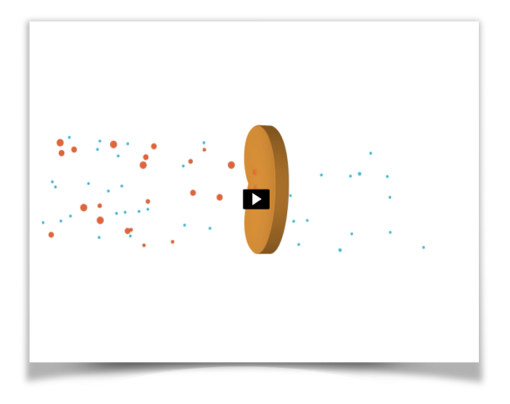
So how can we precisely define Chronic Kidney Disease (CKD)?

CKD is defined as either decreased kidney function, identified by an eGFR of <60 mL/min/1.73m² or as kidney damage, identified by a UACR ≥30 mg/g (≥3 mg/mmol), when measured at 2 timepoints over a ≥3-month period.7

CKD IS a “SILENT DISEASE”

While patients may not feel early symptoms of CKD, inside their kidneys intraglomerular pressure may be building.3‒5


If left unchecked, this pressure can cause irreversible damage to nephrons — leading to reduced kidney function, poor outcomes (increased mortality risk), and ultimately, lower quality of life.1,5

The silent nature of early CKD often leads to patients being diagnosed only after the disease has
already progressed, limiting effective
intervention opportunities.1,5

Having conversations about CKD is one of the key building blocks for successful early intervention, which has been shown to slow disease progression and reduce the risk of complications.1,5

Help your patients who are at risk for CKD (or have been recently diagnosed with CKD) understand what they can do to improve outcomes.

 
Conversation with CKD Patients
It’s Time to Talk
CKD Video
 
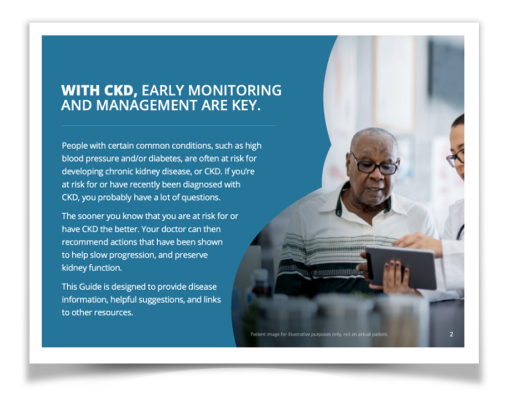
CKD Management Patient Counselling Resource
Download the Patient
Counselling Resource

It’s Time to Talk CKD!
You can make a difference — test, diagnose, and discuss.


Having a conversation with your patients is an important step in slowing the progression of CKD, prolonging quality of life, extending life, and living free of dialysis.1,5 By talking to patients early, you can help them avoid surprises later. So when you see a decline in eGFR or an increase in UACR, kick off the conversation.

Our Patient Counselling Resource was created with input from patients and can help you guide conversations with patient-friendly language and simple, proactive actions they take to improve their kidney health.

CKD, chronic kidney disease; eGFR, estimated glomerular filtration rate; KDIGO, Kidney Disease: Improving Global Outcomes; UACR, urine albumin-creatinine ratio.


References
  1. Tangri N et al. BMJ Open. 2023;13:e067386.
  2. ISN-KDIGO CKD Early Identification & Intervention in Primary Care document. Refer to guidelines for more information on treatment, monitoring and additional considerations for nephrology consultation. Commissioned and funded by AZ. Available at: https://www.theisn.org/initiatives/ckd-early-screening-intervention/#PrimaryCare.
  3. GBD Chronic Kidney Disease Collaboration. Lancet. 2020;395(10225):709–733.
  4. Kidney Disease Stats. National Institutes of Health, National Institute of Diabetes and Digestive and Kidney Diseases. Available at: https://www.niddk.nih.gov/health-information/health-statistics/kidney-disease.
  5. Tangri N et al. Adv Ther. 2023;40:2869–2885.

The information on this website is provided by AstraZeneca for educational purposes only and this site is intended for Non-UK and Non-US healthcare professionals only.

It should not be used for diagnosing or treating a health problem or disease.

Cookie Policy
Privacy Policy
Legal Notice and Terms of Use
Contact Us
Site Map
ERA Leading European Nephrology
Primary Care Diabetes Europe (PCDE) Welcomes all Healthcare Professionals Working for People with Diabetes in a Community
European Society of Hypertension (ESH) Provide a Stable and Organised European Platform for Scientific Exchange in Hypertension
AstraZeneca Logo White
AstraZeneca Veeva Document ID: Z4-58094
Date of preparation: 11 2025
©2025 AstraZeneca. All rights reserved.

Access to this website is for Non-US and Non-UK healthcare professionals.

By clicking the link below, you declare and confirm that you are a Non-US and Non-UK healthcare professional.

ACCESS THE SITE

Patients or members of the public

The website is intended for Non-UK and Non-US healthcare professionals only. Please speak to your healthcare provider if you require further information about the burden of CKD.

Media

If you are a member of the press, you should contact
the AstraZeneca press office.Email: global-mediateam@astrazeneca.com
Tel: +44 (0)1223 344 800